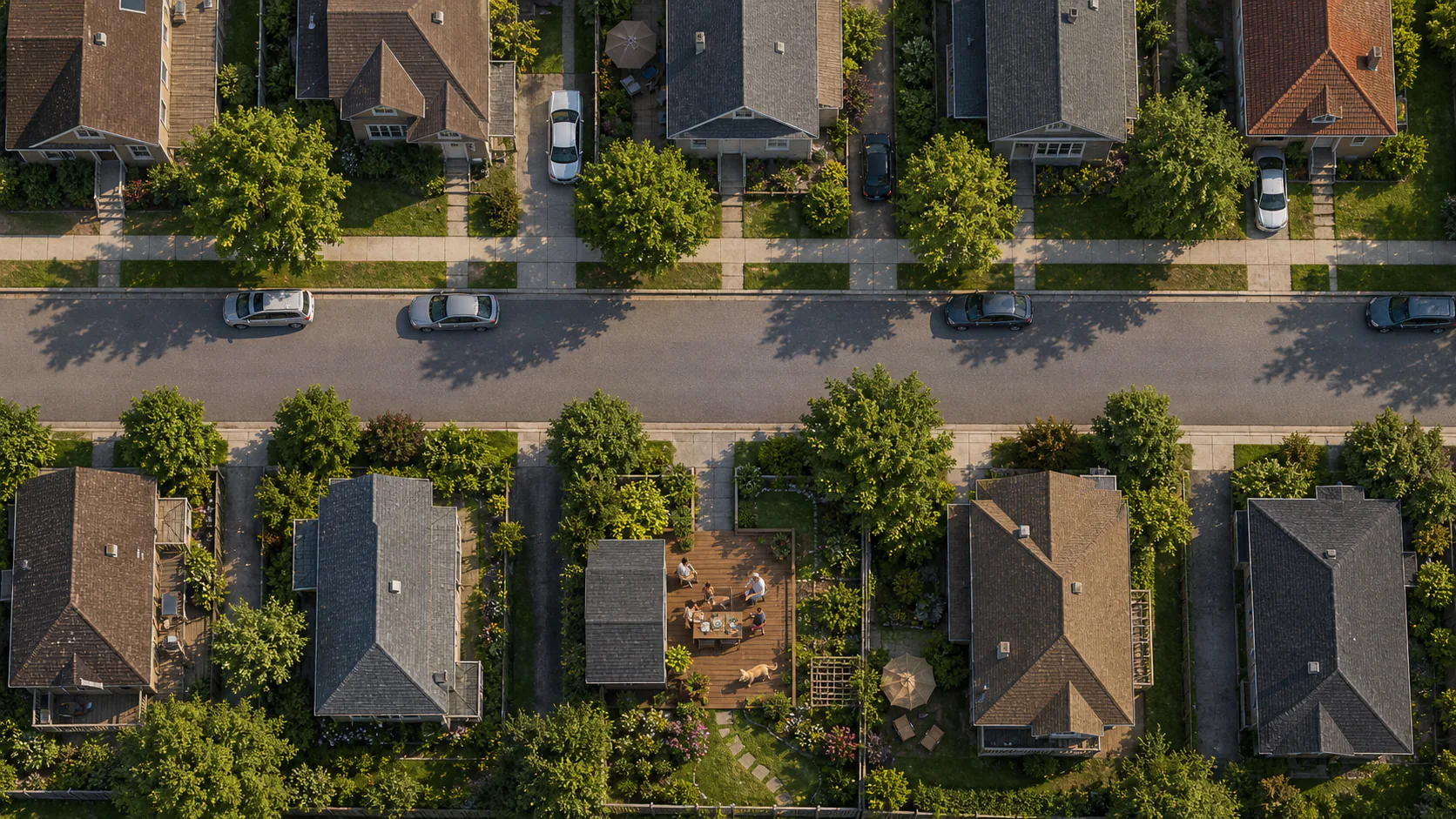
Street scale makes institutions bodily. Lane width influences speed; speed changes stopping distance and injury energy. Curb rules allocate scarce space. Building fronts and sidewalks shape encounter. Deeds, leases, and zoning turn invisible categories into permissions to enter, alter, finance, or exclude.
Households transform biological needs into routines. Food, sleep, cleaning, caregiving, teaching, and emotional repair require time and material resources. Much of this labor is unpaid and distributed unequally. Treating a household as a single preference hides negotiation and power among members.
Feedback links the street to larger markets. Better access can raise property values; higher values affect rent, taxes, investment, and who can stay. More cars create parking demand and danger, which may discourage walking and deepen car dependence. Rules stabilize expectations but can also preserve inherited exclusion.
A common misconception opposes freedom and systems. Personal mobility or home privacy can be real freedoms, yet each relies on collective infrastructure and law. Analyze the trade-off with measurable variables—space per vehicle, travel time, crash risk, rent burden, care hours—then ask who receives benefit and who absorbs cost.