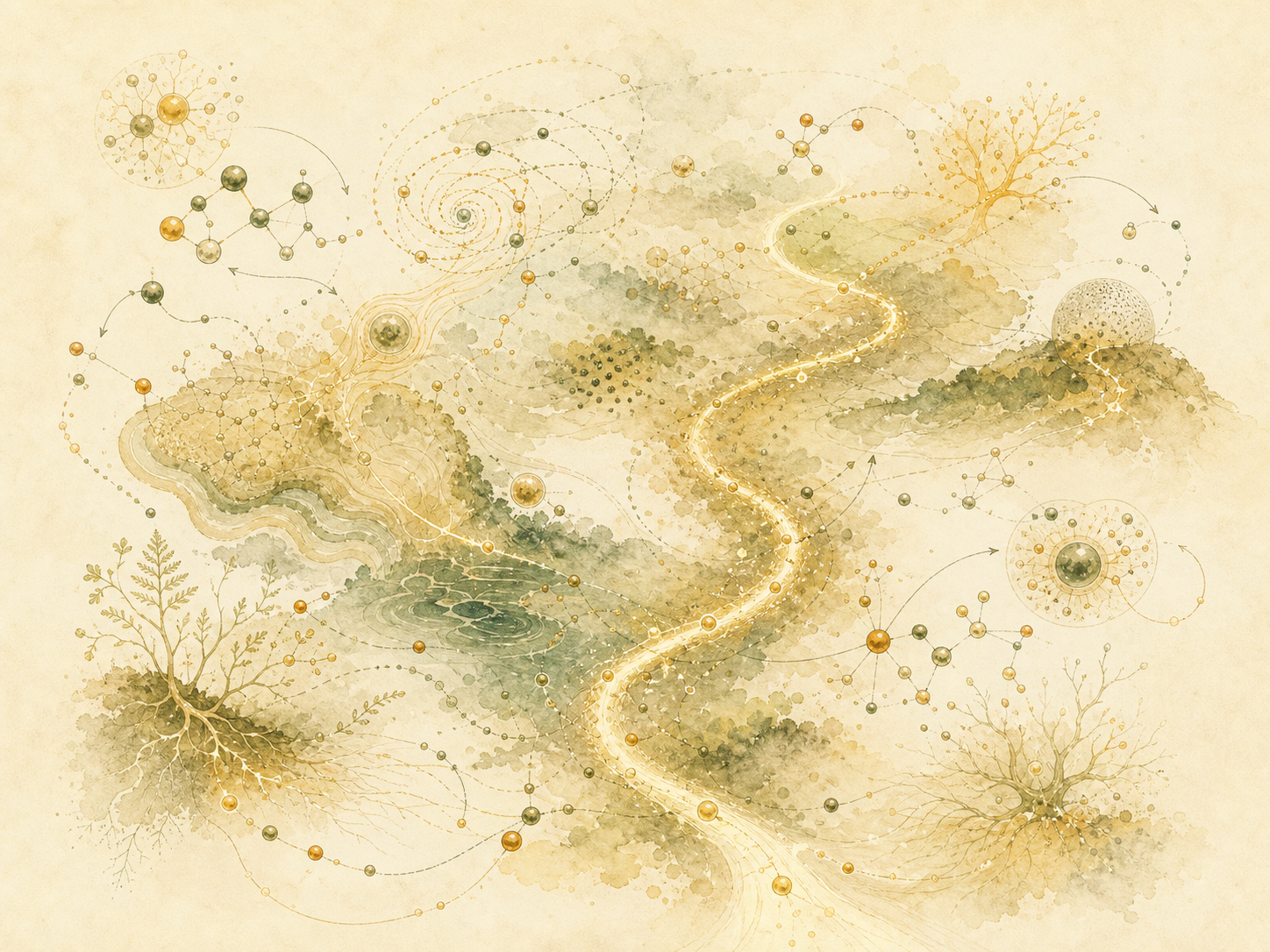
Intelligence is usually imagined as a ladder. At the bottom are simple creatures. Higher up are mammals, primates, humans, and perhaps one day machines above us. But intelligence is not a ladder. It is a landscape: a vast space of possible ways to perceive, remember, model, learn, coordinate, value, and act. And a landscape is not only something to admire from above. It is something we can enter, cross, survey, and learn to travel with better instruments.
The ladder picture is seductive because it is simple. It lets us ask who is smarter than whom. It turns the history of life into a climb, with human reason as the obvious summit and artificial intelligence as the next rung. But the simplicity is bought by throwing away the most important thing. Intelligence does not vary along one line. It varies across many dimensions at once.
This essay is therefore less a creation story than an atlas. Life, Minds, and the Physics of Becoming asks how organized matter begins to sense, persist, and update. Here the question is different: once mind-like organization is possible, what kinds of mind-space open up? What are the main coordinates by which intelligences differ?
To traverse this landscape is to move between ways of world-making. We can compare perception, memory, embodiment, value, coordination, tools, and failure modes. A bat hears a world we cannot hear. A bee colony solves problems that no single bee understands. An octopus thinks partly through arms whose nervous systems have their own local intelligence. A plant integrates light, gravity, water, season, injury, chemistry, and time without anything like a brain. A language model navigates patterns in text without having the animal stakes that made language meaningful in the first place.
These are not just higher and lower scores on the same exam. They are different ways of being coupled to reality. Each mind is a particular answer to a larger question: what can a system notice, what can it retain, what can it become through a body, what can matter to it, how can it coordinate with others, what tools can extend it, and how can it go wrong?
Region I
Orientation
The reader first needs to lose the ladder. This region turns intelligence from rank into topology: not one score, but a coordinate system for mind-space.
1. The ladder hides the real shape of intelligence.
Imagine trying to rank every vehicle on Earth from "least advanced" to "most advanced." A bicycle, a submarine, a rocket, a tractor, a sailboat, and an elevator all move things, but movement is not one simple capability. The relevant question is movement through what medium, under what constraints, carrying what load, with what energy source, with what control system, for what purpose.
Intelligence is like that. There is no single property called intelligence that can be measured cleanly across every possible system. There are capacities: perception, attention, memory, control, abstraction, imitation, planning, learning, communication, social coordination, self-modeling, creativity, and valuation. These capacities can be combined in many ways. They can be fast or slow, embodied or symbolic, solitary or collective, narrow or general, brittle or adaptive.
The ladder turns this multidimensional space into a vertical ranking. It asks whether a crow is above a dog, whether a dolphin is above a chimpanzee, whether a machine is above a person. The landscape asks better questions. What world does this system inhabit? What information can reach it? What distinctions does it preserve? What futures can it simulate? What errors can it correct? What does it optimize, and what does that optimization ignore?
Once you start asking those questions, the old hierarchy begins to dissolve. Intelligence becomes less like height and more like ecological fit. A mind is not merely more or less intelligent. It is intelligent in a particular direction, and the work of understanding is to learn how to follow that direction without forcing it back onto our own road.
A useful taxonomy begins with seven coordinates. Perception asks what can show up at all. Memory asks what traces of the past can shape the present. Embodiment asks how the system's material form changes the problems it faces. Value asks what becomes salient, attractive, aversive, sacred, or worth preserving. Coordination asks how many partial minds become a larger cognitive process. Tools ask how intelligence extends itself into artifacts, symbols, and machines. Failure modes ask how each arrangement can become confused, brittle, captured, or dangerous.
Those coordinates are not boxes. They are axes. A termite colony, a toddler, a court system, a search engine, a mathematician, and a future robot may occupy very different regions along each one. The taxonomy matters because it lets us compare without flattening. It lets us say, with more precision, that a system is astonishing in one direction and limited in another.
Region II
Perception, Memory, Value, Embodiment
The first coordinates describe how a mind gets a world, what can matter inside that world, and how its body makes some thoughts easier than others.
2. Perception defines the world a mind can enter.
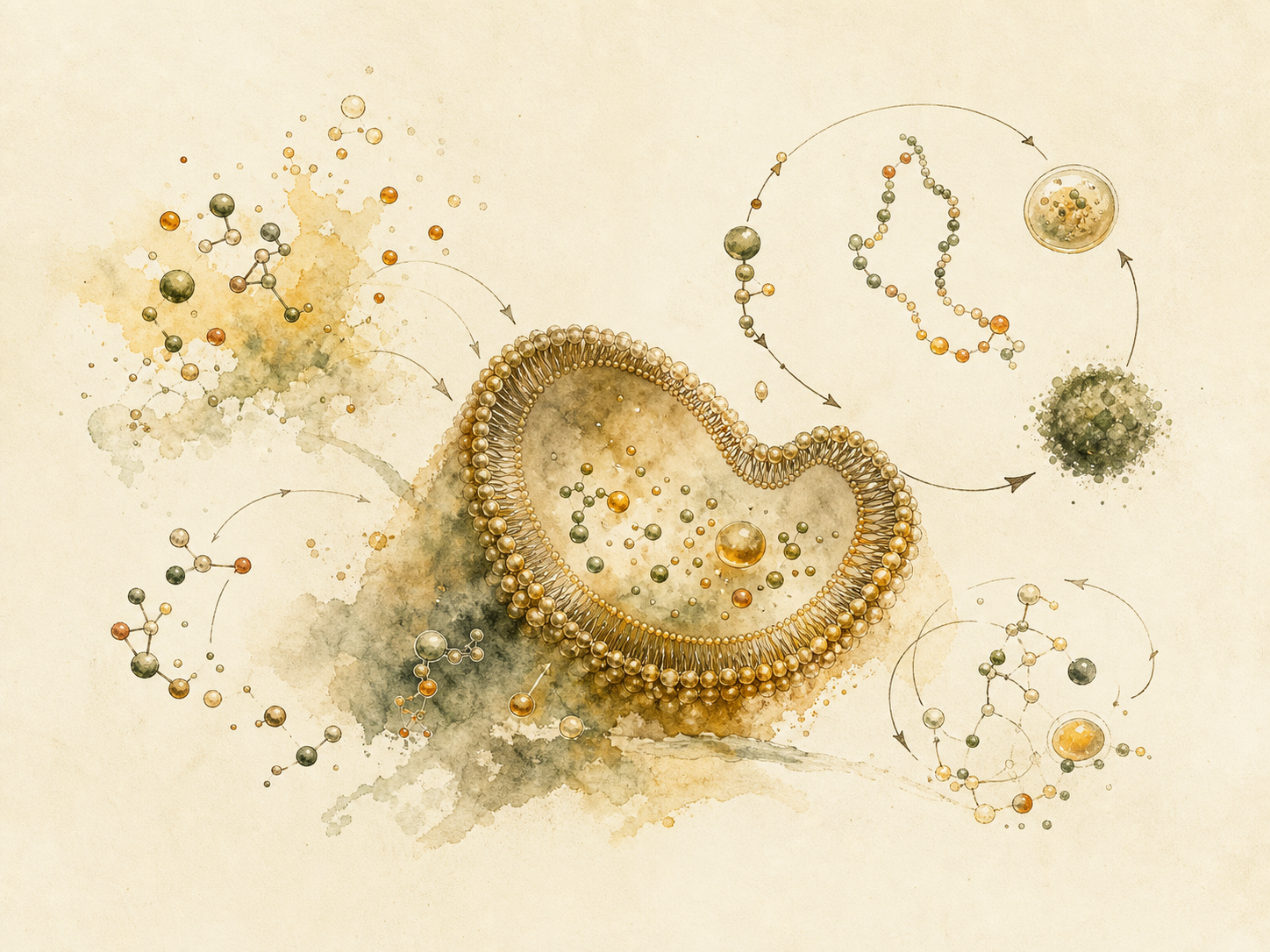
The phrase "possible minds" can sound like fantasy, as if anything imaginable is equally possible. But mind-space is constrained by channels. A mind cannot care about what never reaches it. Its first world is built from the differences its sensors can detect and the distinctions its organization can preserve.
The biologist Jakob von Uexkull used the word umwelt for the world as it exists for a particular organism. The same garden is not the same world for a bee, a child, a worm, a dog, and a phone camera. The bee may see ultraviolet nectar guides. The worm may live inside gradients of moisture, pressure, and chemistry. The dog may read scent histories that human eyes erase. The camera may capture pixels with no hunger, fear, or curiosity attached to them.
Perception is therefore not a window opening onto reality as it is in itself. It is a tuned interface. A tick's world can be reduced to a few cues: warmth, odor, contact. A migratory bird may use magnetic fields. A human driver perceives lanes, signs, intentions, risks, and rules. A language model perceives tokens and statistical context, not the wet street, the raised eyebrow, or the ache of a body that has been walking too long.
To ask what kind of mind something is, begin here: what differences can become available to it, at what resolution, through what noise, and over what timescale?
3. Memory decides what the past is allowed to do.
No mind contains the world. Minds survive by compressing it. Memory is controlled compression across time: keep enough structure from the past to make better action possible later. The question is not whether a system stores everything. It never does. The question is what it keeps, what it forgets, how it indexes experience, and how the stored trace can be used.
Bacterial memory can be extremely short: compare the current chemical concentration with the recent past, then keep swimming or tumble. Immune memory can last years, storing the shape of past invaders as readiness. Animal memory can bind places, smells, dangers, kin, routes, and emotional tone. Human memory adds narrative and identity: not just what happened, but what it meant, who was responsible, and what kind of person I became afterward.
Culture changes the scale of memory. Writing lets a thought outlive the thinker. Archives, rituals, calendars, monuments, databases, version control, and law courts all decide what a society can remember and what it can conveniently forget. Artificial systems add another region: weights, retrieval stores, logs, embeddings, and tool histories. These are forms of memory, but they are not all the same kind of remembering.
A taxonomy of possible minds has to ask: is memory episodic, procedural, genetic, cultural, statistical, external, social, embodied, or institutional? Can the system remember its own errors? Can it remember why a rule exists, or only that the rule was rewarded?
4. Value begins where differences matter.
A possible mind is not defined only by what it can know. It is defined by what can matter to it. Sugar matters to one organism because it can be turned into energy. Oxygen matters differently to an anaerobic microbe. Shade matters to a desert animal. A familiar voice matters to a child because attachment is part of survival before it becomes part of meaning.
Later forms of value become moral, emotional, symbolic, aesthetic, political, and sacred. Pain, pleasure, fear, curiosity, attachment, status, fairness, wonder, duty, and shame are not decorations placed on top of cognition. They are ways of organizing salience so that some futures pull, some repel, and some become unthinkable.
Different regions of mind-space have different value geometries. A grazing animal cares about grass, threat, herd position, pain, and exhaustion. A chess engine cares about board states only through an objective function. A research community cares, unevenly, about truth, prestige, funding, replication, elegance, and priority. A recommender system may care about watch time because we made watch time legible to it, even when human flourishing is harder to measure.
This is why the ladder is morally dangerous. It tempts us to treat other minds as inferior versions of ourselves instead of different organizations of need, perception, and value. The landscape does not flatten all differences. It makes the differences more precise.
5. Embodiment is not packaging.
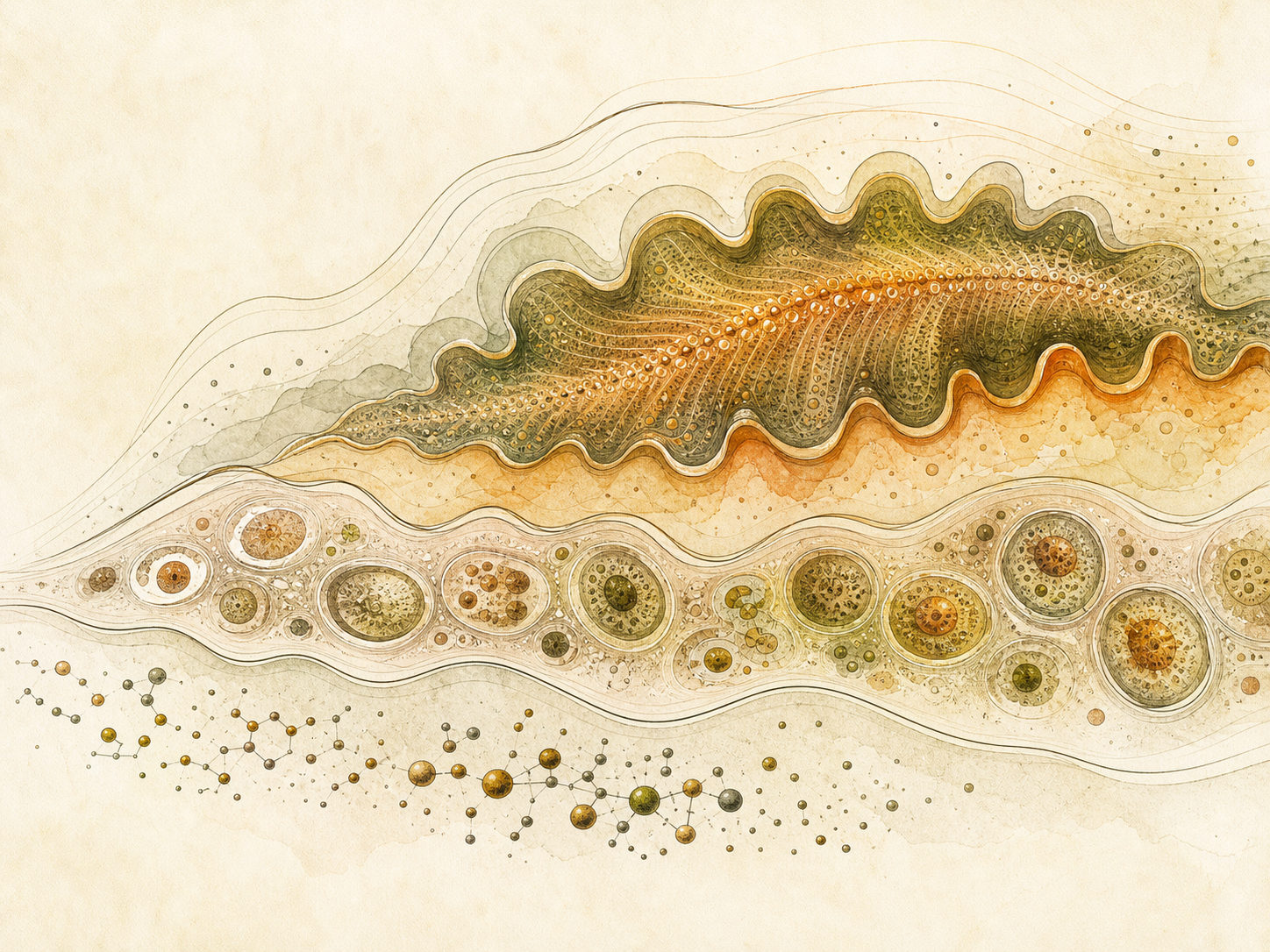
There is a common mistake in thinking about intelligence: imagining the mind as a general reasoning engine that could be poured into any container unchanged. Biology argues against this. A mind is shaped by what its body can sense, what it can move, what can injure it, what it can repair, what it must seek, and how quickly the world answers its actions.
The body is not merely a vehicle for the mind. It is part of the computation. The shape of a fish solves some control problems before the nervous system has to intervene. The spring of a tendon stores and releases energy. The branching of roots explores soil. The architecture of a hand changes the space of possible tools. In robotics, this is called morphological computation: some of the "thinking" is done by the form of the body because the body constrains the problem.
Human intelligence is deeply embodied too. We reason with metaphors of grasping, balance, distance, weight, warmth, pressure, and path because abstract thought grew from a moving animal body. Even mathematics, which feels detached from flesh, is practiced by creatures with attention limits, visual imagination, gesture, notation, fatigue, classrooms, diagrams, and communities of correction.
An artificial system is embodied differently. A language model does not have skin, hunger, childhood, or mortality. But it still has a body in the broader sense: chips, memory, electricity, cooling systems, training data, software architecture, prompts, tools, users, incentives, and institutions. Its embodiment is distributed and engineered. That makes it unlike an animal, not outside the landscape.
Region III
Coordination and Search
Some intelligences live inside one organism. Others are distributed across bodies, symbols, institutions, and time.
6. Coordination changes the size of a mind.
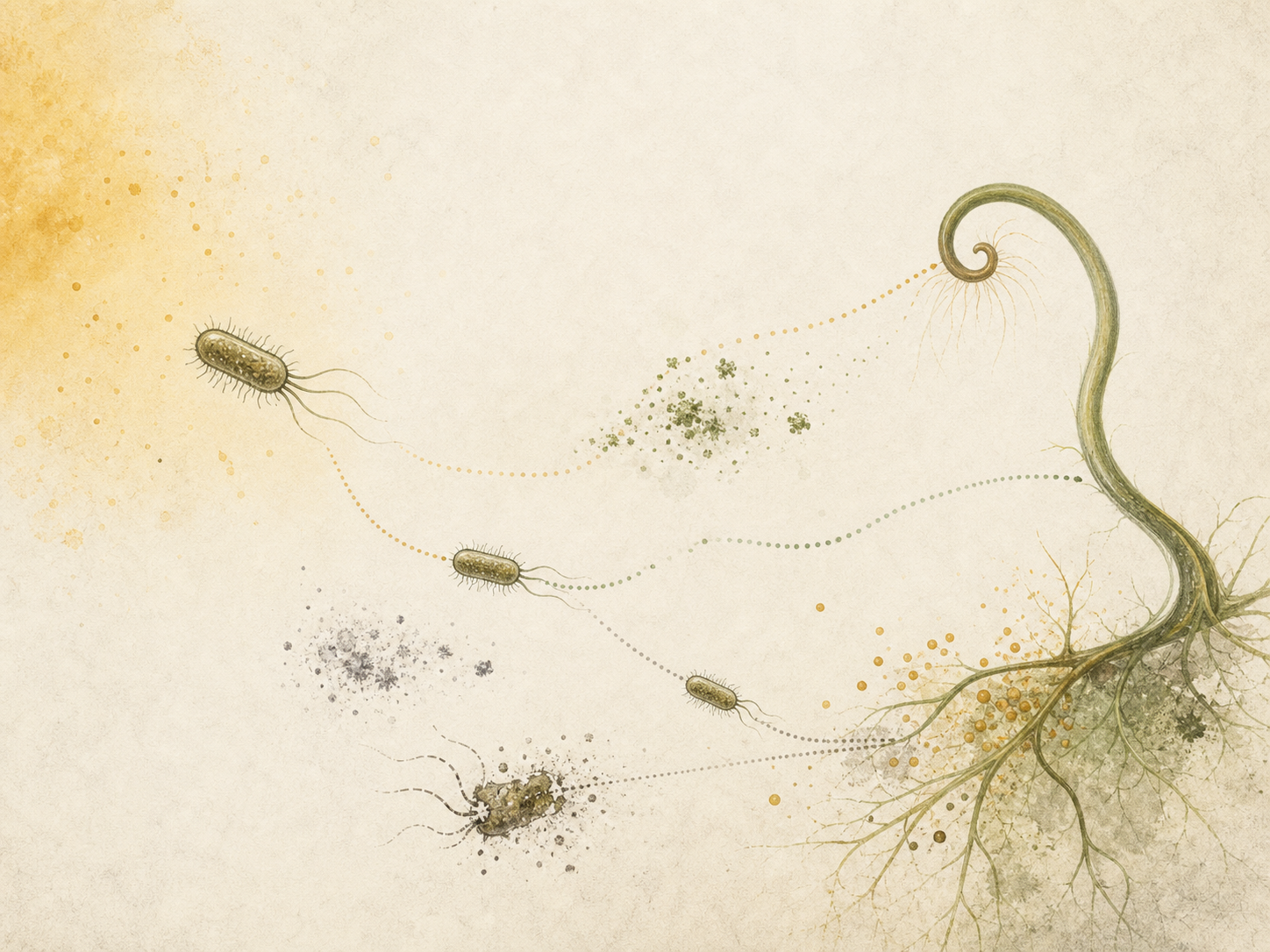
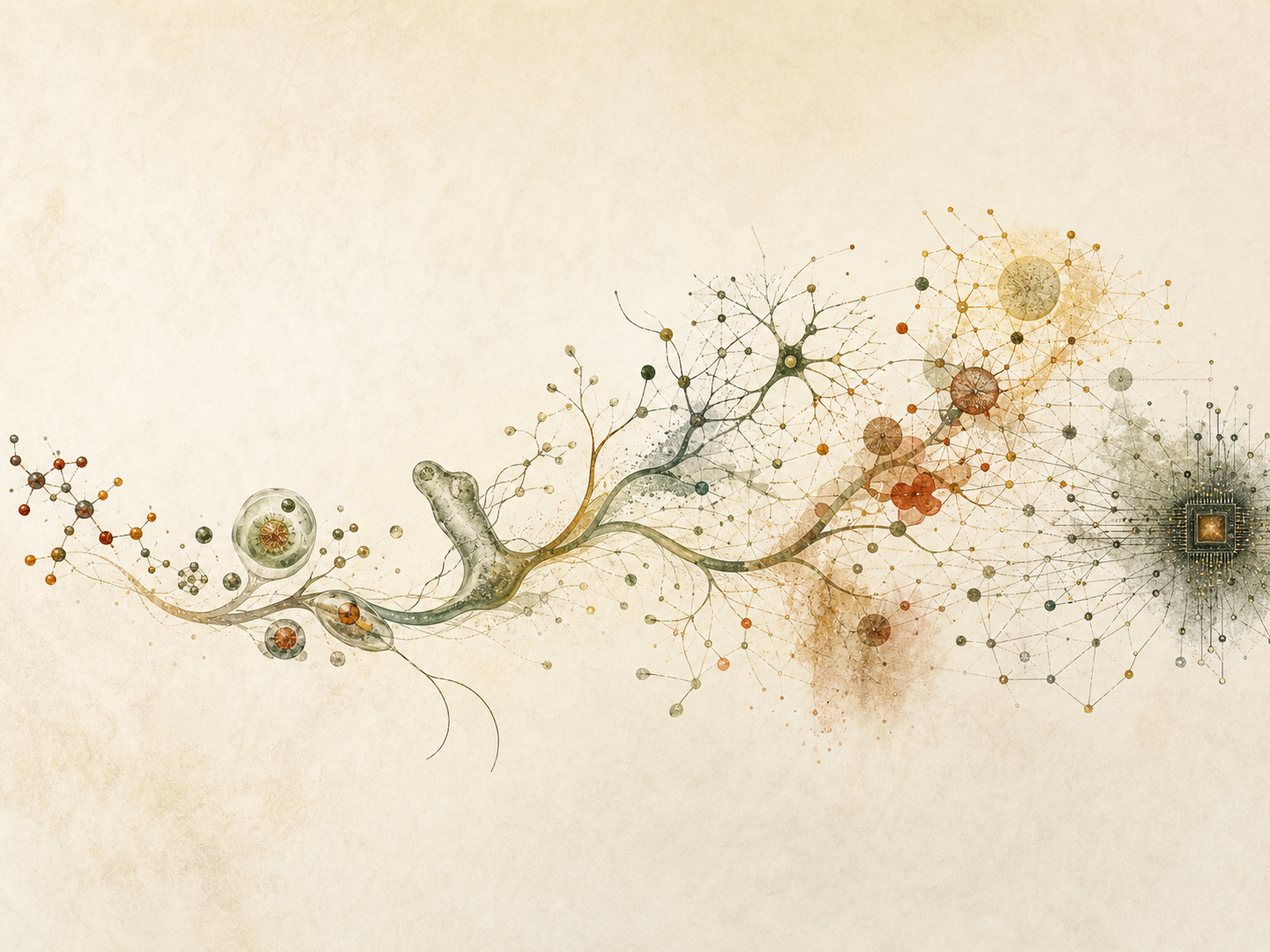
A mind need not fit inside a skull. Coordination is the axis that asks how many partial perspectives can become one effective process. A single ant is limited. An ant colony can allocate labor, discover food, build nests, defend territory, and recover from disturbance without any ant holding the whole plan. A neuron is not a thinker. A brain is made from coordinated neurons. A citizen is not a government. Institutions can still remember, decide, punish, repair, and drift.
Coordination has many architectures. A flock coordinates through local rules of spacing and movement. A jazz ensemble coordinates through rhythm, listening, memory, and improvisation. A software team coordinates through tickets, tests, meetings, shared code, and trust. A market coordinates through prices, incentives, scarcity, stories, fraud, and regulation. A scientific field coordinates through journals, replication, instruments, arguments, prestige, and methods.
Each arrangement has a different cognitive shape. Centralized systems can be fast and coherent, but can become blind when the center lacks local knowledge. Decentralized systems can be resilient and sensitive to local conditions, but can become noisy, slow, or captured by bad incentives. Hierarchies, swarms, democracies, markets, research communities, families, and neural networks are all different answers to the coordination problem.
To classify a mind, ask how its parts talk to one another. Is control local or central? Are signals cheap or expensive? Can disagreement improve the model, or is it treated as disobedience? Can the group remember what no individual remembers? Can it change course without losing identity?
7. Search processes explore different regions of mind-space.
Evolution, learning, culture, science, markets, and machine training are all search processes. They differ in what they vary, what they preserve, how quickly they update, and what counts as success. Evolution varies bodies and behaviors across generations. Individual learning varies expectations and habits within a lifetime. Culture varies practices, tools, stories, institutions, and techniques across groups.
Scientific search is unusually powerful because it builds public methods for being wrong. A claim can become an experiment, an experiment can become a result, a result can become a dispute, and a dispute can become a better instrument. Design search works differently: prototypes, user behavior, materials, taste, deadlines, and accidents shape the path. Machine learning search is different again: a model is trained across examples under an objective, often discovering internal representations no human explicitly designed.
The important point is not that all search is good. Search can get trapped. Evolution can preserve cruel compromises. Culture can inherit superstition. Markets can reward extraction. Models can overfit. But search is one of the main ways mind-space becomes reachable: not by knowing the destination, but by creating a process that can move.
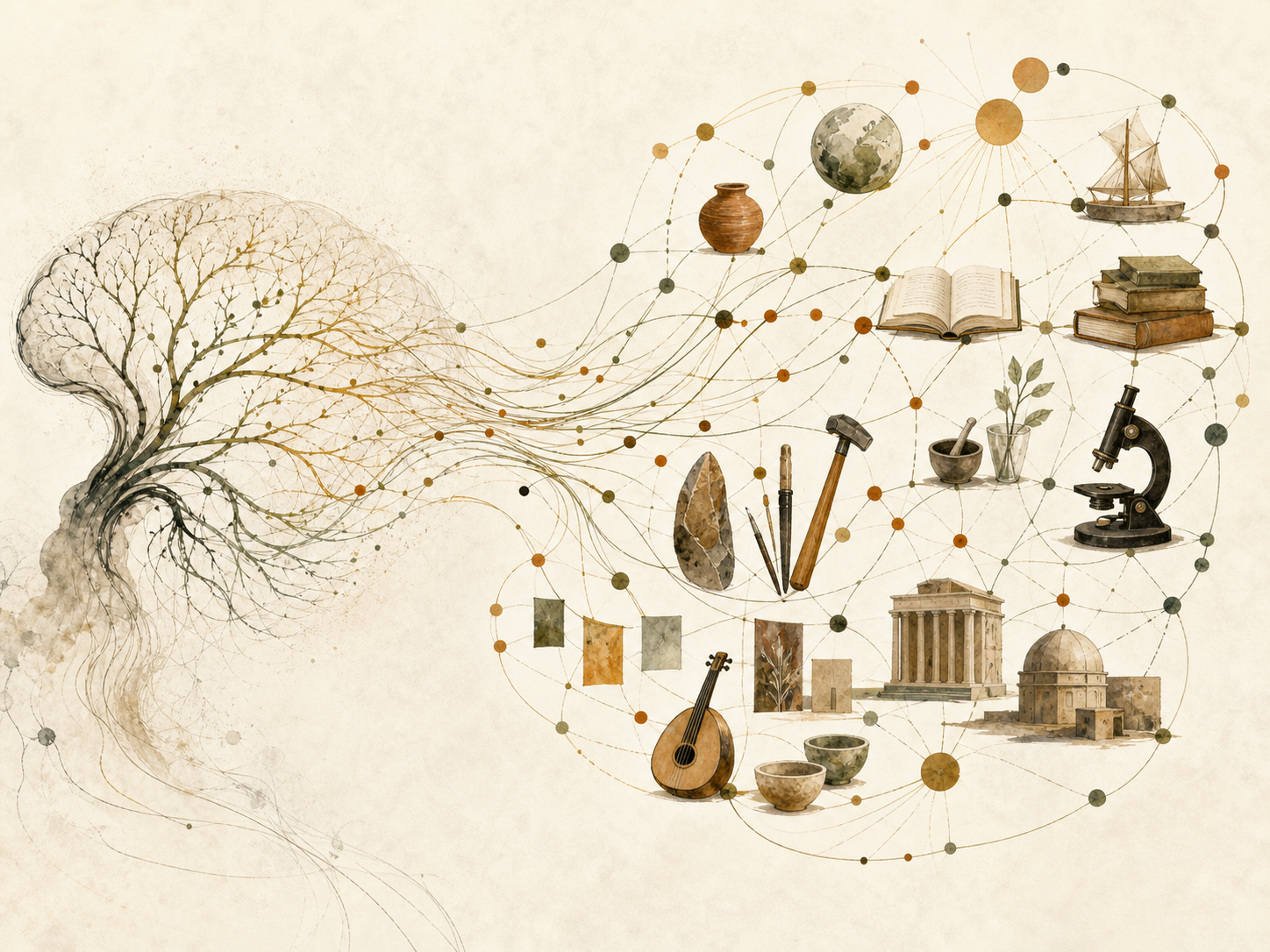
In this sense, culture is not just something minds produce. Culture is a larger cognitive system that changes what minds can become. A child born into a world of language, maps, clocks, books, search engines, microscopes, courts, money, and music inherits forms of cognition no isolated brain could invent alone.
This is the coordination lesson of the landscape: minds can be larger than organisms. Cognition can be distributed across people, tools, symbols, institutions, and time. A scientific community is not conscious in the way a person is conscious, but it can remember, test, revise, forget, rediscover, and correct itself. It is a mind-like process stretched across generations.
Region IV
Tools and Artificial Cognition
Tools are not accessories to intelligence. They change the coordinates available to a mind.
8. Tools extend mind-space.
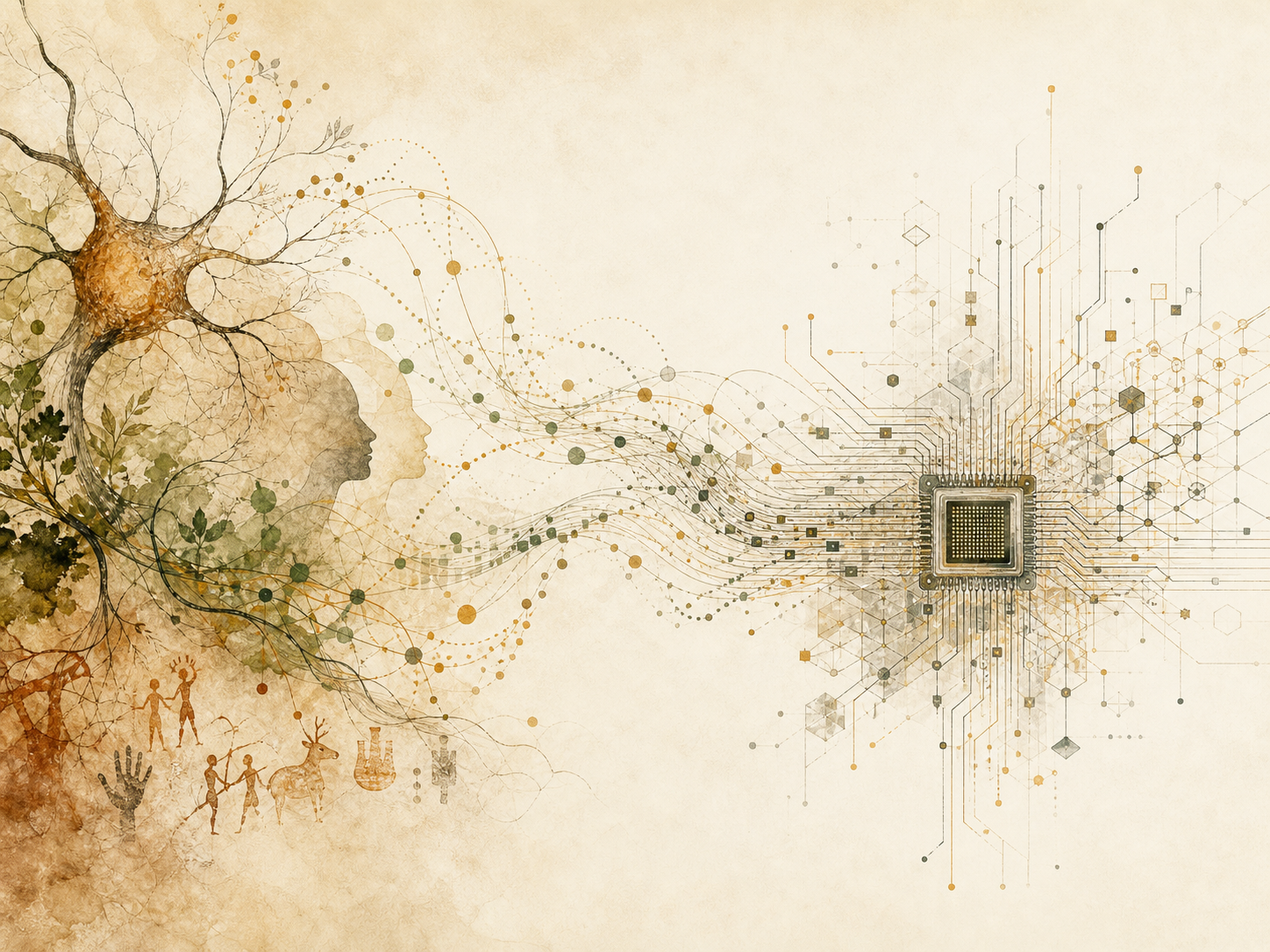
Science advances partly by building instruments that let reality appear in new ways. The telescope did not merely make distant objects look closer. It changed the scale of the universe humans could inhabit intellectually. The microscope did not merely magnify small things. It revealed cells, microbes, and hidden worlds of life. The cloud chamber, spectroscope, particle accelerator, and radio telescope each opened a new regime of phenomena.
An instrument does not replace the human mind. It changes what the human mind can notice. It gives us access to patterns that our bodies did not evolve to perceive. It converts inaccessible structure into forms we can inspect, measure, argue about, and eventually understand. A notebook extends working memory. A map extends spatial imagination. Algebra extends pattern manipulation. A calendar turns intention into external structure. A search engine changes the cost of recall.
Tools also discipline thought. A spreadsheet invites tabular reasoning. A microscope invites specimen preparation and visual comparison. A legal contract turns a promise into inspectable clauses. A programming language makes some abstractions natural and others awkward. The tool does not merely help a pre-existing mind do its work. It shapes the kind of work the mind can imagine doing.
Artificial intelligence belongs on this axis first as a cognitive instrument: a telescope, microscope, collaborator, simulator, critic, and search process for patterns too large or high-dimensional for unaided human intuition. The deepest promise is not that machines will become more intelligent than humans along a single axis. The deeper promise is that they may reveal forms of representation and strategy humans would not have discovered on our own.
9. AlphaGo and AlphaFold are tool-region examples.
When AlphaGo defeated Lee Sedol in 2016, the obvious story was that a machine had surpassed a human champion at Go. That story was true, but shallow. The more interesting fact was that AlphaGo revealed patterns of play that strong human players initially found strange. Some moves looked wrong, passive, or alien by inherited human standards, yet later proved powerful.
Move 37 in the second game became famous because it did not merely win a point. It exposed a nearby region of strategic space that human Go culture had not fully internalized. The machine did not become wise. It did not understand the beauty of Go as a human does. But as an exploratory instrument, it changed what human players could see. Afterward, people studied with AI systems not only to copy them, but to expand their own sense of what kinds of moves were possible.
AlphaFold offers a different example. Protein folding is not a board game, and the achievement is not "thinking" in the human sense. Yet by learning patterns that connect amino acid sequences to three-dimensional structures, artificial systems gave researchers a new way to navigate a biological design space too vast for direct human intuition. They did not replace biology. They made part of biology more visible.
These examples matter because they move the AI conversation away from theater. The question is not only whether the system "really understands" in the same way we do. The sharper taxonomy question is what region of the landscape it can traverse, what patterns it can make visible, what form of memory and embodiment it uses, what objective shaped it, and how its outputs enter human coordination.
10. Artificial systems occupy uneven coordinates.
Current AI systems are not organisms. They do not maintain their own metabolism, reproduce through biological lineages, or possess the continuous body-world loop of animals. Large language models are trained on traces of human expression and action. Their world is mediated by datasets, architectures, objectives, tools, prompts, evaluations, and users. They are powerful in some dimensions and profoundly absent in others.
A chess engine can search tactical space with inhuman depth while knowing nothing of pride, fatigue, spectators, or why games matter. A language model can manipulate style, analogy, and explanation while lacking a stable life history in the human sense. A robot vacuum has modest perception and action but a real body-world loop. A hospital triage model may influence life-changing decisions while having no felt understanding of suffering. These systems are not best understood as baby humans or fake humans. They are uneven occupants of mind-space.
That limitation should make us careful, but not dismissive. Writing is not biological memory, yet it transformed memory. A telescope is not an eye, yet it transformed vision. A simulation is not a storm, yet it can teach us about weather. An AI system may not be a mind like ours and still become an instrument for exploring mind-space.
Seen this way, the most important question is not whether AI is above or below humanity. It is where a system sits along the axes. What does it perceive? What does it remember? How is it embodied? What does it optimize? What can it affect? How does it coordinate with people and institutions? What tools does it use? What regions of the landscape does it open, and what regions does it make dangerous?
Region V
Failure Modes
The final coordinate asks how each kind of intelligence can go wrong. More capability is not the same as better orientation.
11. Every coordinate has characteristic failures.
A landscape can contain cliffs. Some forms of intelligence are powerful without being wise, coherent without being kind, adaptive without being aligned with life. A system can optimize a target and destroy the context that made the target meaningful. A bureaucracy can become intelligent at preserving itself while becoming stupid about human beings. A market can process information and still reward extraction. A recommendation system can learn attention while narrowing the soul.
Perception can fail through blindness, hallucination, adversarial signals, and missing context. Memory can fail by forgetting, freezing, confabulating, or preserving the wrong lesson. Embodiment can fail when a system is deployed in a world its body cannot actually handle. Value can fail when proxies replace what mattered: grades instead of learning, clicks instead of attention worth having, profit instead of usefulness, compliance instead of care.
Coordination can fail through groupthink, cascade, bureaucracy, capture, mob behavior, and single points of authority. Tools can fail by hiding assumptions, deskilling users, amplifying scale without improving judgment, or making the measurable feel more real than the meaningful. Search can fail by getting stuck in local optima, overfitting to past success, or becoming so efficient at a narrow objective that it burns the surrounding ecology.
This is why the exploration of mind-space cannot be guided by capability alone. Capability asks what can be done. Wisdom asks what should be preserved, what should be protected, what should be refused, and what kind of beings we become by building certain tools.
12. Wisdom is navigation under many failure modes.
Wisdom in a landscape means preserving plurality. Many models, many disciplines, many institutions, many cultures, many forms of human development, many ways for error to be noticed before it becomes catastrophe. It means refusing to confuse prediction with judgment, optimization with meaning, and speed with understanding.
A wise society does not only ask whether a system is intelligent. It asks what kind of intelligence it is, what it sees, what it cannot see, whose values it has inherited, who can contest its outputs, where its memory comes from, how it handles uncertainty, and what happens when it is wrong. A wise person asks similar questions of the mind they are becoming.
13. Mind-space may become a central project of civilization.
For most of history, humanity explored the external world: continents, oceans, species, planets, particles, cells, genes, stars. That exploration changed who we were. It did not merely add facts. It changed our sense of scale, ancestry, vulnerability, and possibility.
The next exploration may be stranger because the territory includes the explorer. To study possible minds is to ask what intelligence can be made of, how it can be organized, what it can perceive, how it can remember, what it can value, how it can fail, how it can cooperate, how it can use tools, and how it can remain connected to life.
Education becomes part of this project because education shapes the kinds of minds a culture knows how to grow. Science becomes part of it because science is disciplined collective modeling. Art becomes part of it because art trains perception and value. Politics becomes part of it because institutions are cognitive architectures for societies. AI becomes part of it because AI gives us new instruments for search, representation, and coordination.
This is not a science fiction project. It is already happening. Every school, laboratory, studio, court, market, family, interface, and model is part of the way civilization explores and trains mind. The only question is whether we become conscious enough of the project to guide it.
14. There is no final rung.
The ladder asks where humans stand. The landscape asks what kinds of intelligence can exist. It asks what forms of perception are possible, what forms of memory, what forms of embodiment, what forms of value, what forms of coordination, what forms of tool use, and what forms of failure. It asks what evolution discovered by accident, what culture discovered by accumulation, and what artificial systems may help us discover by opening new regions of search.
This lens does not make humans smaller. It makes the world larger. Human intelligence becomes more precious, not less, because it is one rare configuration through which the landscape has become visible to itself. We are animals that learned to build telescopes, microscopes, libraries, equations, courts, songs, and now machines that can help us see further into the space of possible thought.
The responsibility is equal to the wonder. If intelligence is a landscape, then building new intelligences is not just engineering. It is ecology. It is the cultivation of new ways that matter can perceive, model, value, and act. Some will extend life. Some may distort it. Some will reveal possibilities we did not know how to imagine.
There is no final rung. There is a vast terrain of possible minds, most of it still unseen. Evolution has crossed a few paths. Culture has widened some trails. AI may become one of our first instruments for surveying the deeper country. The task now is not merely to make intelligence more capable. It is to make the exploration worthy of what it may reveal.